Quick answer: A new car typically loses about 20% of its value in the first year and roughly half within five years, though the rate varies by model. A $40,000 car is worth about $32,000 after one year and $20,078 after five, so buying a 2- to 3-year-old car can save around $14,653 or more.
Depreciation is the difference between what you pay and what the car is worth when you sell. It is usually the largest single cost of owning a new vehicle, bigger than fuel, insurance or maintenance in the early years.
The numbers below use a general curve (20% in the first year, then about 11% of the remaining value each year). Actual results vary widely by make, model, mileage and market conditions, so treat the figures as a planning model.
Key takeaways
- Year one: about 20% lost, or $8,000 on a $40,000 car.
- Five years: roughly 50% lost, leaving about $20,078.
- The steepest drop is in the first year, so the first owner pays most of the depreciation.
- Some models hold value much better than others; check resale data before you buy.
- Long loans keep you owing more than the car is worth; see negative equity.
The depreciation curve
| Year | Value | Total lost | Share lost |
|---|---|---|---|
| 1 | $32,000 | $8,000 | 20% |
| 2 | $28,480 | $11,520 | 29% |
| 3 | $25,347 | $14,653 | 37% |
| 5 | $20,078 | $19,922 | 50% |
| 7 | $15,903 | $24,097 | 60% |
| 10 | $11,211 | $28,789 | 72% |
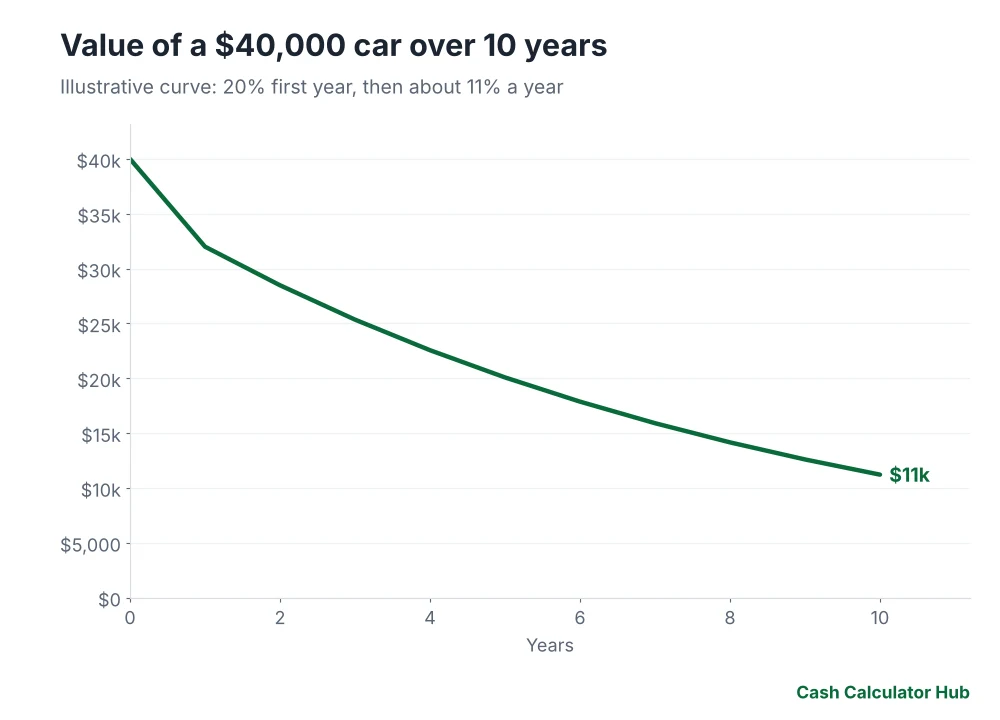
The decline is front-loaded: the first year costs $8,000, the second about $3,520, and the fifth only about $2,481. That pattern is the main reason 2- to 3-year-old cars are popular.
What affects the rate
- Brand and model reputation. Trucks and some imports retain value better; luxury sedans and some EVs lose it faster.
- Mileage. The standard assumption is 12,000 miles a year. Each extra 1,000 miles lowers the value.
- Condition and accident history.
- Supply and demand. Used car prices swing with new-car supply and interest rates.
- Technology changes. Rapid improvements, as in EV range, can lower resale values for older models.
What depreciation means for your budget
The AAA 2025 Your Driving Costs study put depreciation at about $4,334 a year for a new vehicle, around 37% of the total yearly ownership cost it estimated. Over five years that is more than $21,670. See the full cost of ownership.
Buying new versus nearly new
| New | 3 years old | |
|---|---|---|
| Price | $40,000 | $25,347 |
| Value after 5 more years of ownership | $20,078 (age 5) | $14,154 (age 8) |
| Depreciation over 5 years of ownership | $19,922 | $11,193 |
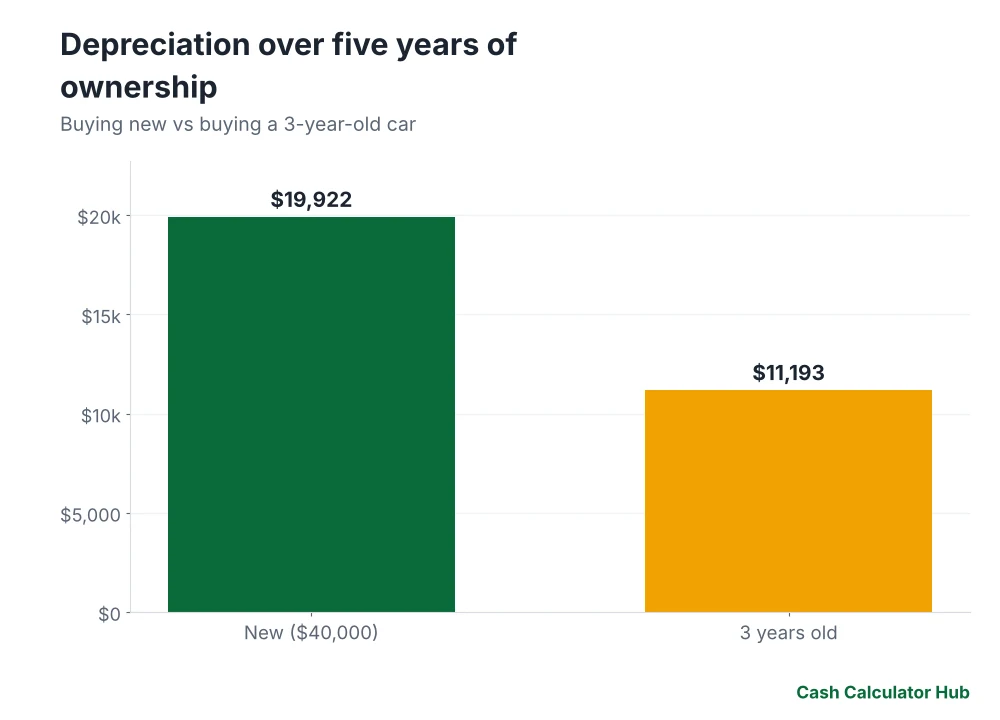
Buying the 3-year-old car cuts depreciation during your ownership by about $8,729, though it may have higher maintenance costs and a higher loan rate. Compare the full picture in new versus used car cost.
How to slow depreciation
- Buy a model known for strong resale value.
- Keep mileage under the average and service the car on schedule.
- Keep records of maintenance.
- Choose popular colors and options.
- Sell or trade in before big repair bills hit, but after the steepest drops.
Depreciation and your loan
If you finance with little or no down payment, your loan balance can be higher than the car’s value for years. Insurance may not cover that difference after a total loss, which is why many lenders offer gap coverage. See gap insurance and how much to put down.
Estimate yours
Use the depreciation calculator for custom rates and the auto loan calculator to see how a loan compares to value. More: auto calculators.
Frequently asked questions
How much does a new car depreciate in the first year?
About 20% on average, though some models lose more or less. A $40,000 car would be worth about $32,000 after a year.
Which cars depreciate the slowest?
Models with strong demand, such as many trucks and some SUVs and sports cars, tend to depreciate slowest. Check recent resale data for specific models.
Is it better to buy a new or used car to avoid depreciation?
A 2- to 3-year-old car avoids the steepest drop, so the first owner absorbs most of the depreciation.
Do electric cars depreciate faster?
Many EVs have lost value faster than gas cars, partly because of price cuts and fast battery technology changes. It varies by model.
Does mileage affect depreciation?
Yes. Higher mileage than the typical 12,000 miles per year reduces value.
Sources and further reading
How the numbers were made: Every figure on this page was calculated from the formulas and assumptions stated above and rounded to the nearest dollar. Rates, limits and rules are for 2026 unless noted; confirm current figures with the sources listed before acting.
Keep reading
This guide is general information, not financial, tax or legal advice. Figures use stated assumptions and 2026 rules and will differ from your situation; check current rules and talk to a licensed professional before you decide. Full disclaimer.