Quick answer: On $13,700 of debt with $300 extra a month, avalanche saves $96 versus snowball.
If you have more than one debt, the order you attack them in is the main decision. There are two well-known strategies, and they are less different than the internet arguments suggest.
The two methods
- Avalanche: pay minimums on everything, then put all extra money toward the debt with the highest interest rate. When it is gone, move to the next highest.
- Snowball: same, but target the smallest balance first, regardless of rate. Freed-up payments roll into the next smallest.
The example
| Debt | Balance | APR | Minimum |
|---|---|---|---|
| Store card | $1,200 | 26% | $40 |
| Card A | $4,000 | 22% | $100 |
| Card B | $2,500 | 17% | $60 |
| Personal loan | $6,000 | 11% | $150 |
Total: $13,700, with minimums of $350. Add $300 extra each month, for $650 a month in total.
The result
| Avalanche | Snowball | |
|---|---|---|
| Debt-free in | 2 yrs 1 mo | 2 yrs 1 mo |
| Total interest | $2,250 | $2,345 |
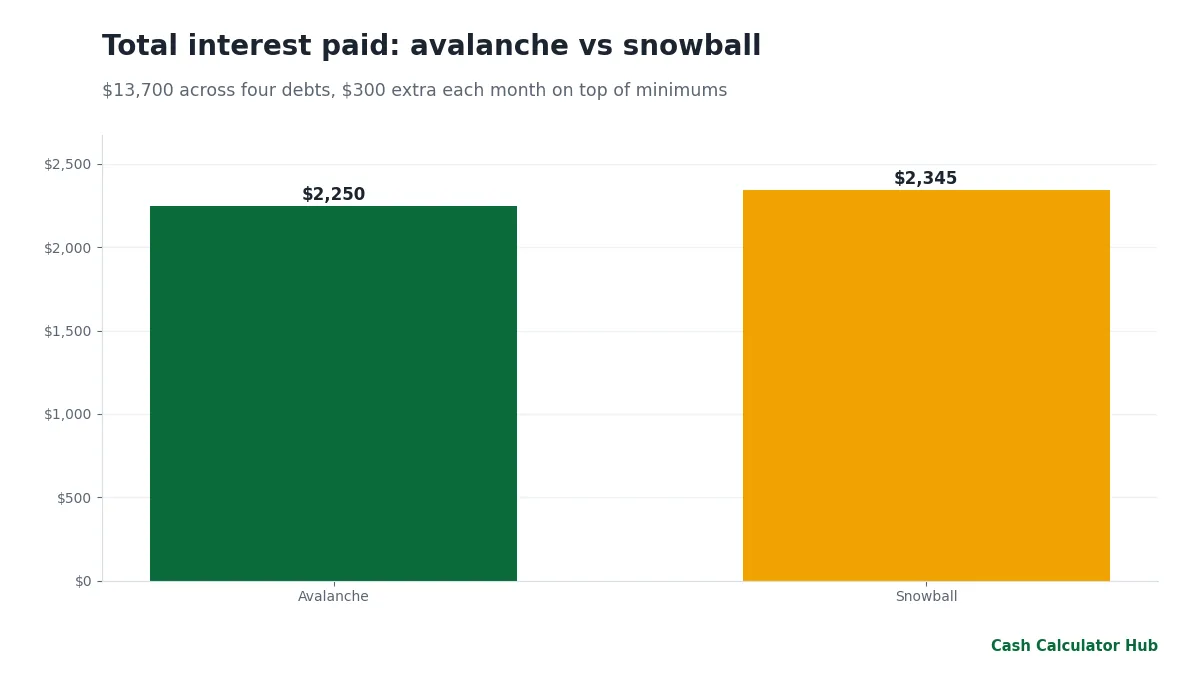
Avalanche finishes in the same month but saves $96 in interest. This is a real, if modest, difference. It grows when the highest-rate debt is also a large balance, and it shrinks when the smallest debt happens to have a high rate (as it does here, with the store card).
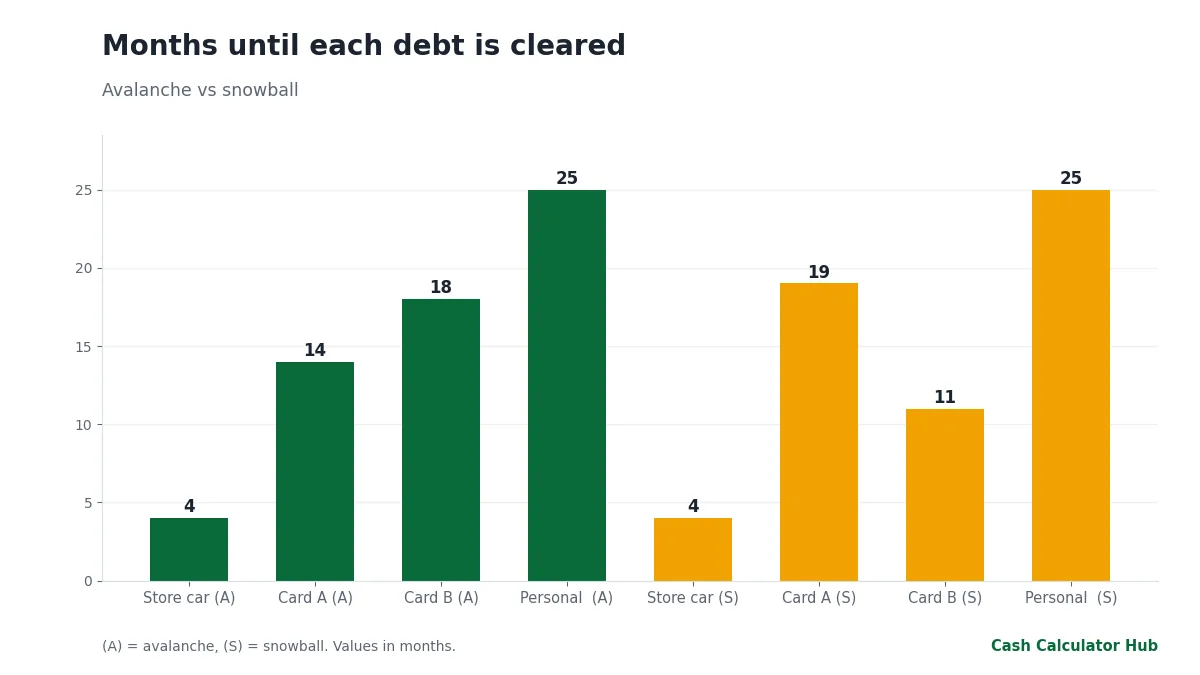
Why snowball still works for many people
The best plan is the one you finish. Research on debt repayment suggests that people who see accounts close are more likely to stay motivated. If paying off the $1,200 store card in month 4 gives you a win that keeps you going, that matters. In this example the first target is the same in both methods because the store card has both the highest rate and the smallest balance. When they differ, snowball costs more in interest.
How to choose
- If rates differ a lot (for example 26% versus 7%), the avalanche saves meaningful money.
- If your motivation is shaky, start with snowball.
- A hybrid: pay off one or two small debts for momentum, then switch to avalanche.
- If balances are similar, the methods converge.
Boosting the extra payment
The method matters less than the amount. Every extra $100 a month shortens the plan substantially. Ideas: a temporary budget cut using the 50/30/20 rule, directing raises and tax refunds to debt, and avoiding new balances. For single high-rate cards, see the timeline in how long the minimum takes.
Consider consolidation
If you have good credit, a lower-rate loan or balance transfer could cut interest on the card debts, but the fees and terms matter. Compare in debt consolidation: is it worth it?.
Plan it
Enter your own debts in the debt payoff calculator and switch between avalanche and snowball. For a single debt, the repayment calculator shows the payoff date with extras. See all loan tools.
Make the extra money bigger
The method matters less than how much extra you can send each month. Four ways to find it:
- Redirect one-time money. Tax refunds, bonuses and sales of unused items go straight to the target debt.
- Negotiate rates. One call to a card issuer can reduce an APR.
- Lower fixed costs for a season. Cutting a phone plan, insurance shopping or temporary roommates can free a few hundred dollars.
- Increase income temporarily. A side gig for a year with 100% of earnings aimed at debt shortens the plan a lot.
Keep the plan alive
- Automate minimum payments on every debt so you never miss one.
- Pay the target debt the day your paycheck arrives.
- Track progress monthly and celebrate each debt that closes.
- Do not take new debt during the plan, or the finish line moves.
- Keep a small emergency fund. Without it, a surprise bill goes back on the card.
When a debt is paid off, add its entire payment to the next target, which is the “snowball” effect that gives both methods their power. If you want a lower rate, compare with consolidation.
Which saves more money?
Avalanche, by definition. How much depends on your rates and balances.
Which is faster?
Usually about the same in total, but they clear different debts first.
Should I save an emergency fund first?
A small buffer ($1,000 to start) prevents new debt when surprises happen.
What about 0% promotional debt?
Pay the minimum and focus extra payments on higher-rate debt, but make sure you clear the promo balance before the rate resets.
Sources and further reading
- CFPB: Debt collection and repayment
- Consumer Financial Protection Bureau
- MyMoney.gov: Financial literacy resources
How the numbers were made: Every figure on this page was calculated from the formulas and assumptions stated above and rounded. Rates, limits and rules are for 2026 unless noted; confirm current figures with the sources listed before acting.
Keep reading
- The 50/30/20 Budget Rule: How It Works, and How to Adjust It
- How Long to Pay Off a Credit Card Making Only the Minimum?
- Is Debt Consolidation Worth It? A $18,000 Credit Card Example
- Pay Off Your Mortgage Early: What Extra Payments Really Save
- Personal Loan vs Credit Card: Which Costs Less for a Big Expense?
- Zero-Based Budgeting: Give Every Dollar a Job (With a Worked Example)
This guide is general information, not financial, tax or legal advice. Figures use stated assumptions and 2026 rules and will differ from your situation; check current rules and talk to a licensed professional before you decide. Full disclaimer.