
Quick answer: FICA tax is 7.65% of wages for employees: 6.2% for Social Security on wages up to $184,500 in 2026 and 1.45% for Medicare on all wages. Employers pay a matching 7.65%. Earners above $200,000 (single) also pay an extra 0.9% Medicare surtax, and the maximum employee Social Security tax in 2026 is $11,439.
The “FICA” line on your paycheck (Federal Insurance Contributions Act) funds Social Security and Medicare. It is calculated on gross wages, mostly separate from income tax, and many deductions that lower income tax do not lower it.
Key takeaways
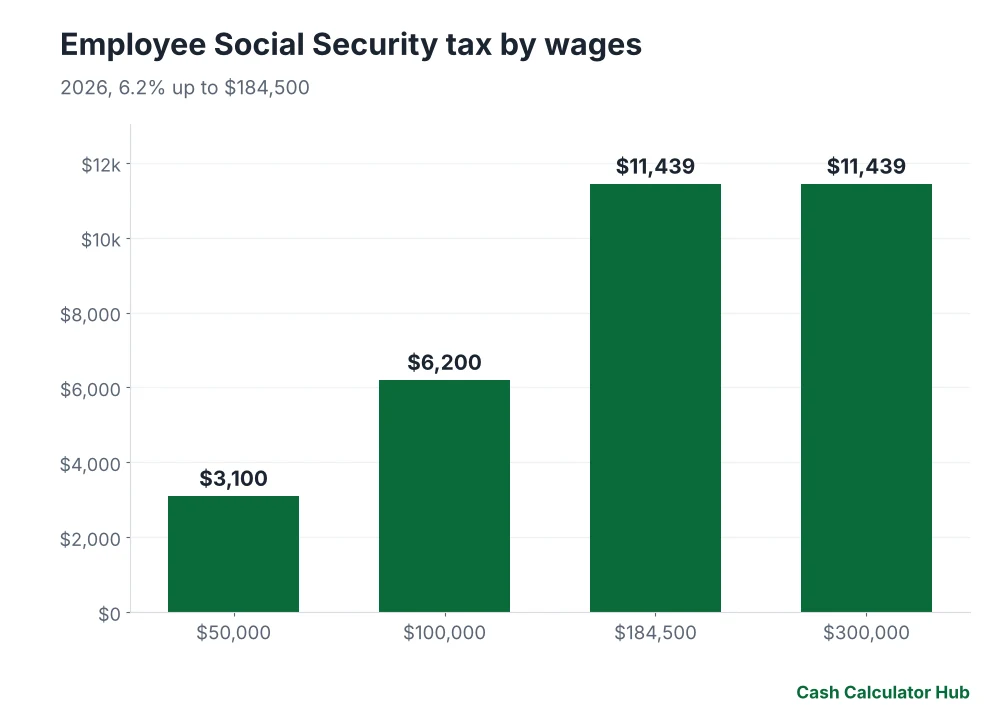
- Social Security: 6.2% on wages up to $184,500 (maximum $11,439).
- Medicare: 1.45% on all wages, plus 0.9% above $200,000 single or $250,000 joint (employee only).
- Employers pay a matching 7.65% (no surtax); self-employed people pay both halves.
- Traditional 401(k) contributions reduce income tax but not FICA wages.
- FICA taxes earn you credits toward Social Security and Medicare eligibility.
2026 rates
| Tax | Employee | Employer | Wage limit |
|---|---|---|---|
| Social Security | 6.2% | 6.2% | $184,500 |
| Medicare | 1.45% | 1.45% | None |
| Additional Medicare | 0.9% | — | Above $200,000 (withholding threshold) |
Examples
| Wages | Social Security | Medicare | Additional Medicare | Total FICA |
|---|---|---|---|---|
| $50,000 | $3,100 | $725 | $0 | $3,825 |
| $100,000 | $6,200 | $1,450 | $0 | $7,650 |
| $184,500 | $11,439 | $2,675 | $0 | $14,114 |
| $250,000 | $11,439 | $3,625 | $450 | $15,514 |
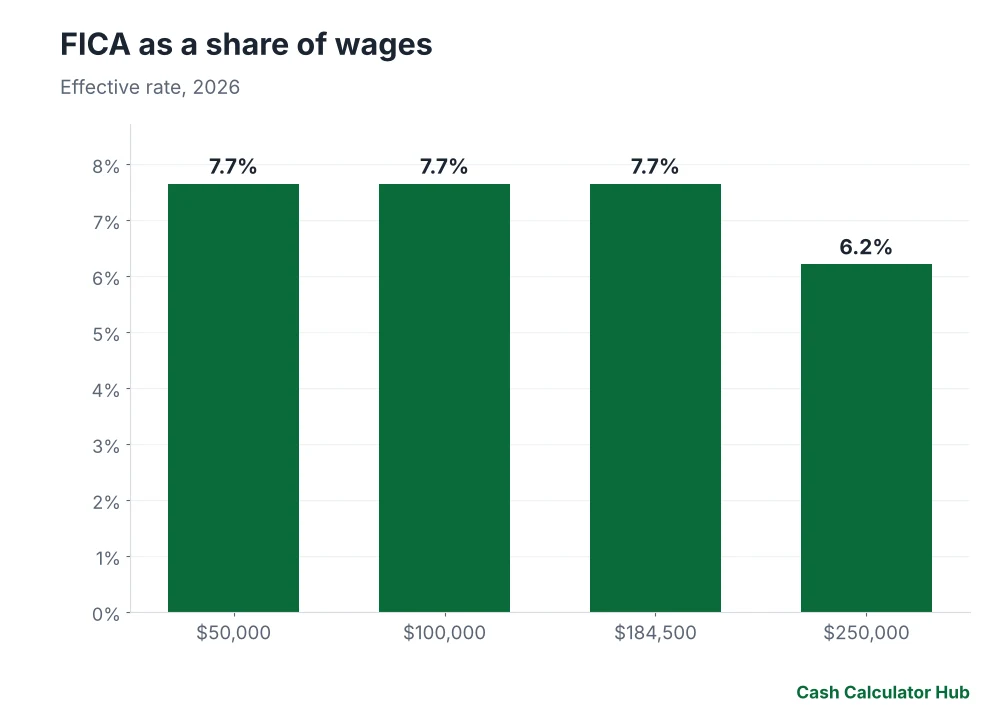
Note how the effective rate falls after the Social Security wage base: earners at $250,000 pay a lower percentage than those at $100,000.
What is subject to FICA
- Salary, wages, bonuses, overtime and tips.
- Pre-tax 401(k) contributions are still subject to FICA.
- Pre-tax health premiums under a cafeteria plan (Section 125) are exempt.
- HSA payroll contributions through a cafeteria plan are exempt from FICA.
Why your paycheck looks different from tax
FICA is a flat rate, not a bracket system. A person earning $50,000 pays the same 7.65% on the first dollar as on the last. Income tax uses brackets; see 2026 tax brackets.
Self-employed
The self-employed pay both halves, as explained in self-employment tax.
Your benefits link
Your Social Security benefit is based on your 35 highest-earning years of wages up to the wage base. See claiming age. You need 40 credits to qualify for retirement benefits.
Tools
The paycheck calculator and salary calculator include these taxes. See also $100,000 after taxes. More: tax tools.
Frequently asked questions
What is the FICA tax rate for 2026?
7.65% for employees: 6.2% Social Security and 1.45% Medicare. Employers pay the same amount.
What is the Social Security wage base in 2026?
$184,500. Earnings above that are not subject to the 6.2% Social Security tax.
Is there a limit on Medicare tax?
No. The 1.45% applies to all wages, with an extra 0.9% for high earners.
Do 401(k) contributions reduce FICA?
No. Traditional 401(k) deferrals reduce income tax but not Social Security or Medicare wages.
What is the maximum Social Security tax in 2026?
$11,439 for an employee, which is 6.2% of $184,500.
Sources and further reading
How the numbers were made: Every figure on this page was calculated from the formulas and assumptions stated above and rounded to the nearest dollar. Rates, limits and rules are for 2026 unless noted; confirm current figures with the sources listed before acting.
Keep reading
- How Much Is a $100,000 Salary After Taxes in 2026?
- Self-Employment Tax Explained: The 15.3% Tax and How to Estimate It
- Social Security at 62 vs 67 vs 70: When Does Waiting Pay Off?
- How to Read Your Paycheck: Gross Pay, Withholding and Net Pay Explained
- W-2 vs 1099: How Much More You Must Charge to Match an Employee Salary
- Capital Gains Tax Rates 2026: 0%, 15% and 20% Brackets Explained
This guide is general information, not financial, tax or legal advice. Figures use stated assumptions and 2026 rules and will differ from your situation; check current rules and talk to a licensed professional before you decide. Full disclaimer.