Quick answer: A sinking fund is money set aside regularly for a known future expense. Divide the expected cost by the months until you need it: seven common irregular costs totaling $6,540 a year take $545 a month. Keep each fund in a high-yield savings account or labeled sub-account so the money is not spent on everyday things.
An emergency fund is for the unexpected. A sinking fund is for the expected but irregular: car registration, holiday gifts, annual insurance, vacation. Treating them as monthly costs prevents them from hitting as “emergencies” and reaching for credit cards.
Key takeaways
- Monthly amount = cost ÷ months until due.
- Separate from your emergency fund; sinking funds have a purpose and date.
- Use a high-yield savings account with sub-accounts or buckets.
- Start with the costliest or nearest due items.
- Review each year; adjust for inflation and changes.
Example plan
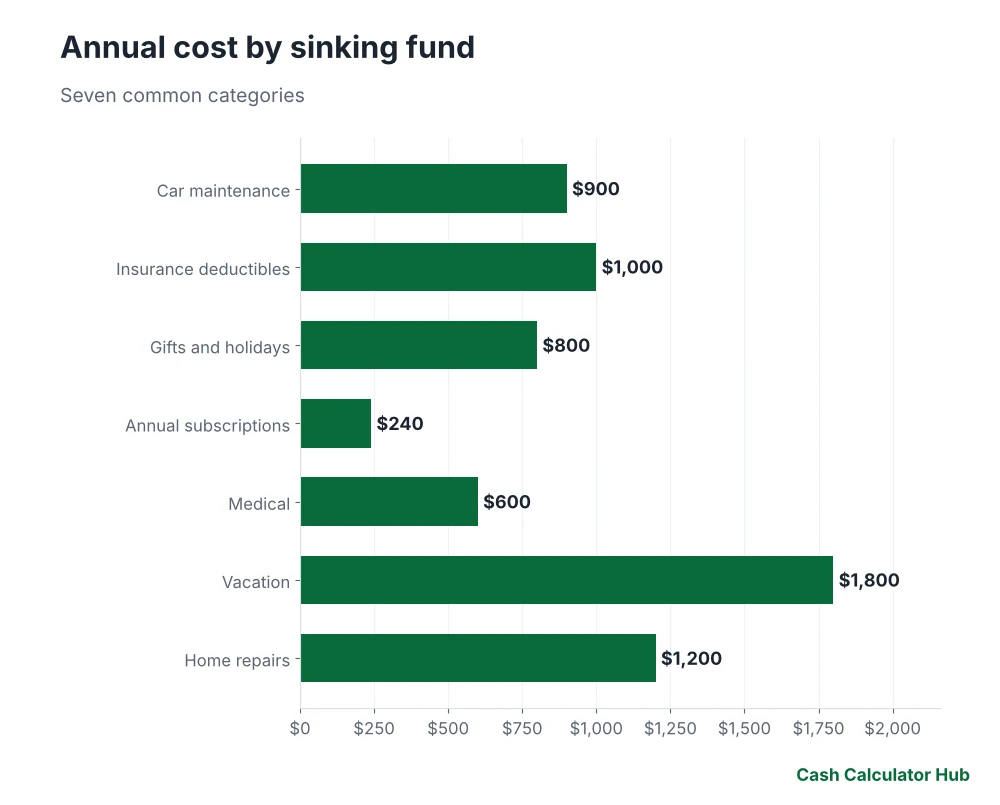
| Category | Annual cost | Monthly saving |
|---|---|---|
| Car maintenance | $900 | $75 |
| Insurance deductibles | $1,000 | $83 |
| Gifts and holidays | $800 | $67 |
| Annual subscriptions | $240 | $20 |
| Medical | $600 | $50 |
| Vacation | $1,800 | $150 |
| Home repairs | $1,200 | $100 |
| Total | $6,540 | $545 |
How to calculate
- List irregular costs from last year’s bank and card statements.
- Estimate the next occurrence and amount.
- Divide by the months remaining.
- Add a small buffer for price increases.
Example: a $1,200 insurance premium due in 8 months needs $150 a month.
Where to keep sinking funds
- A high-yield savings account with sub-accounts or “buckets.” See high-yield savings.
- A separate account for each major fund for visibility.
- Short-term funds (under a year) should not be invested in stocks. See asset allocation.
Interest helps a little
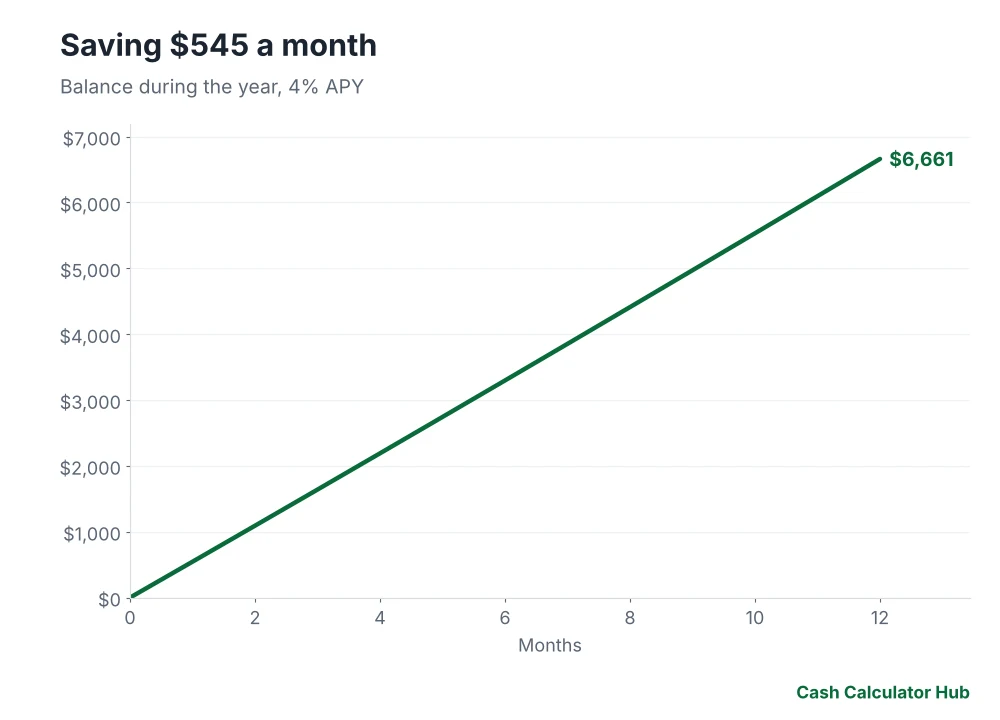
Savings accumulate monthly. At 4% APY, saving $545 a month for a year earns about $121 of interest.
Sinking funds vs emergency fund
| Sinking fund | Emergency fund | |
|---|---|---|
| Purpose | Known irregular expense | Unexpected event |
| Timing | Predictable | Unpredictable |
| Size | Cost of the item | 3 to 6 months of expenses |
| Refill | When spent, start again | After use |
See emergency fund size.
Budget integration
Include sinking funds in your monthly plan as a category, as in the zero-based budget. If the total feels too high, rank by priority and start with the near-term items.
Tools
Use the savings calculator to project balances and the budget planner for the monthly view. More: budgeting tools.
Frequently asked questions
What is a sinking fund?
Money saved regularly for a specific future expense, such as car repairs, gifts or a vacation.
How is a sinking fund different from an emergency fund?
A sinking fund covers expected expenses with known timing; an emergency fund covers unexpected events.
How much should I put in a sinking fund?
Divide the expected cost by the months until it is due.
Where should I keep a sinking fund?
In a high-yield savings account or a separate sub-account, not in the stock market for short-term needs.
How many sinking funds should I have?
As many as you have irregular expenses, but start with the largest few to avoid complexity.
Sources and further reading
- FDIC: Deposit insurance
- Consumer Financial Protection Bureau
- MyMoney.gov: Financial literacy resources
How the numbers were made: Every figure on this page was calculated from the formulas and assumptions stated above and rounded to the nearest dollar. Rates, limits and rules are for 2026 unless noted; confirm current figures with the sources listed before acting.
Keep reading
- The 50/30/20 Budget Rule: How It Works, and How to Adjust It
- Savings Account vs CD: Which Earns More for Your Cash?
- How Long Does It Take to Save $1 Million?
- Pay Yourself First: How to Automate Saving So You Actually Do It
- Zero-Based Budgeting: Give Every Dollar a Job (With a Worked Example)
- How Much Rent Can You Afford? The 30% Rule, the 40× Rule and a Better Test
This guide is general information, not financial, tax or legal advice. Figures use stated assumptions and 2026 rules and will differ from your situation; check current rules and talk to a licensed professional before you decide. Full disclaimer.