Quick answer: What DTI do you need to get a mortgage?
When you apply for a mortgage, the lender is asking one question underneath all the paperwork: after your existing bills, can you carry this payment month after month? The debt-to-income ratio (DTI) is how they answer it in a single percentage.
The two ratios, with real arithmetic
Front-end DTI compares your proposed housing payment to your gross monthly income. Back-end DTI compares all monthly debt payments, including the new housing payment, to the same income.
Suppose you earn $90,000 a year, which is $7,500 a month. You plan a mortgage payment of $2,100 (principal, interest, tax, insurance, PMI) and you also pay $380 on a car and $120 in student loan and card minimums.
- Front-end: $2,100 ÷ $7,500 = 28.0%
- Back-end: ($2,100 + $380 + $120) ÷ $7,500 = 34.7%
Both fit inside the classic 28/36 guideline. Now see what happens when the same buyer carries more debt:
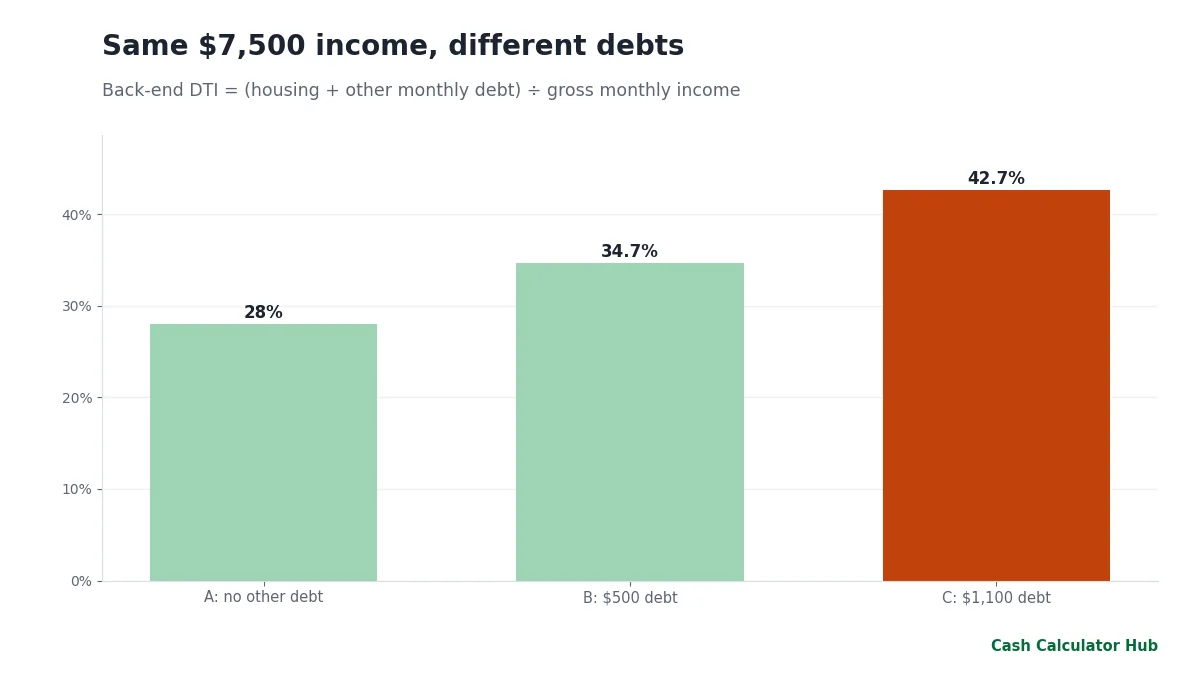
Borrower C has the same salary and the same house but ends up at 43%. Same income, different answer, entirely because of other monthly obligations.
What counts as debt (and what does not)
- Counts: the new housing payment, auto loans and leases, student loans (usually the reported payment, or a percentage of the balance if you are in deferment), minimum credit card payments, personal loans, child support and alimony.
- Usually does not count: utilities, groceries, insurance premiums other than homeowners, phone plans, subscriptions and childcare.
That second list is why DTI does not tell you whether a payment is comfortable. It only tells you whether it is approvable.
Limits by loan type
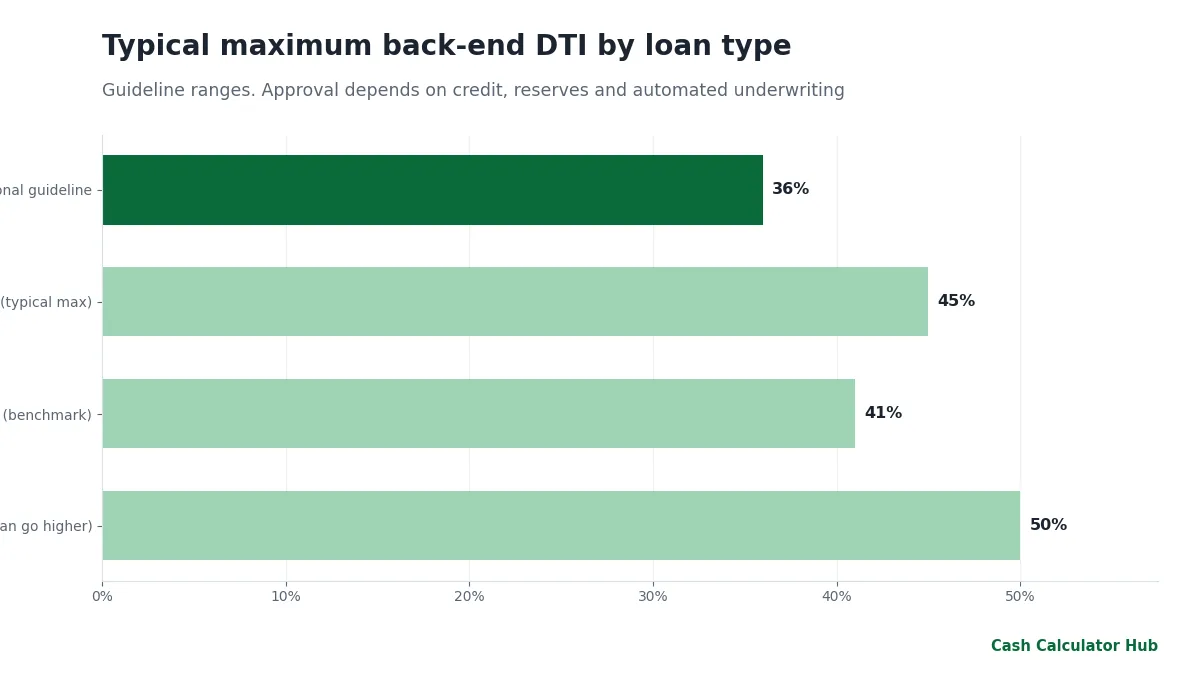
Every program has guidelines and an automated underwriting system that can say yes above them. Treat these as typical ranges, not promises:
| Loan | Front-end | Back-end |
|---|---|---|
| Traditional guideline | 28% | 36% |
| Conventional | flexible | up to about 45%, sometimes 50% with compensating factors |
| FHA | 31% standard | 43% standard, higher with strong compensating factors |
| VA | no set front-end limit | 41% benchmark; residual income also tested |
If you are exploring an FHA mortgage, our FHA versus conventional comparison covers how the mortgage insurance changes the true cost, and you can run the numbers in the FHA loan calculator.
Being approvable and being comfortable are different
A 45% DTI means nearly half of your gross pay is spoken for before taxes. Take out roughly a quarter of gross for income and payroll tax and you are left with about a third of your gross income, or around 40 cents of every take-home dollar, for food, transportation, savings and everything else. This is where many first-time buyers get squeezed.
A better rule of thumb: pick the payment you would be happy with, then check the DTI. Not the other way round. The affordability breakdown for a $100K salary shows the same idea with full tables.
Five ways to lower your DTI before applying
- Pay off the smallest loans first. Removing a $250 monthly payment improves DTI instantly, and it often costs less than the equivalent in extra down payment. The debt payoff calculator can plan the order.
- Do not open new credit. A car purchase between pre-approval and closing is a classic way to lose a loan.
- Raise documented income. Include bonuses, overtime or a second job if you can show two years of history.
- Add a co-borrower. Their income helps, but so does their debt, so run both.
- Pick a longer loan or a bigger down payment. Either one lowers the housing payment.
Three real-world profiles
All three earn $7,500 a month gross and want a $2,100 housing payment.
- The renter with no debt. Front-end 28%, back-end 28%. Approval is easy, and there is room for a slightly larger payment if they want one.
- The new-car owner. A $650 car payment and $150 of card minimums puts back-end DTI at 36.7%. Still fine for most loans, but the lender will look harder at credit and cash reserves.
- The stretched borrower. $1,100 of monthly debt takes back-end DTI to 42.7%. Approval is possible on FHA or with strong compensating factors, but this borrower has the least room if anything goes wrong. Paying off one loan would help more than shopping a lower rate.
Quick check you can run now
Add up your monthly debt payments, divide by your gross monthly income, and compare with the ratios above. Then run the real numbers in the debt-to-income ratio calculator. It shows front-end and back-end percentages together, which is more useful than either alone. For the rest of the tools, see all mortgage calculators.
How some debts are counted
Underwriters do not always use the number printed on your statement. Student loans in income-driven plans or deferment, for example, are often counted at a percentage of the balance, commonly somewhere between 0.5% and 1% a month, when the reported payment is zero or low. Rules differ by loan program and change, so ask your loan officer how yours will be treated before you decide whether a debt is “small.” Installment loans with fewer than about 10 payments remaining can sometimes be excluded; a revolving card balance cannot.
What lenders look at besides DTI
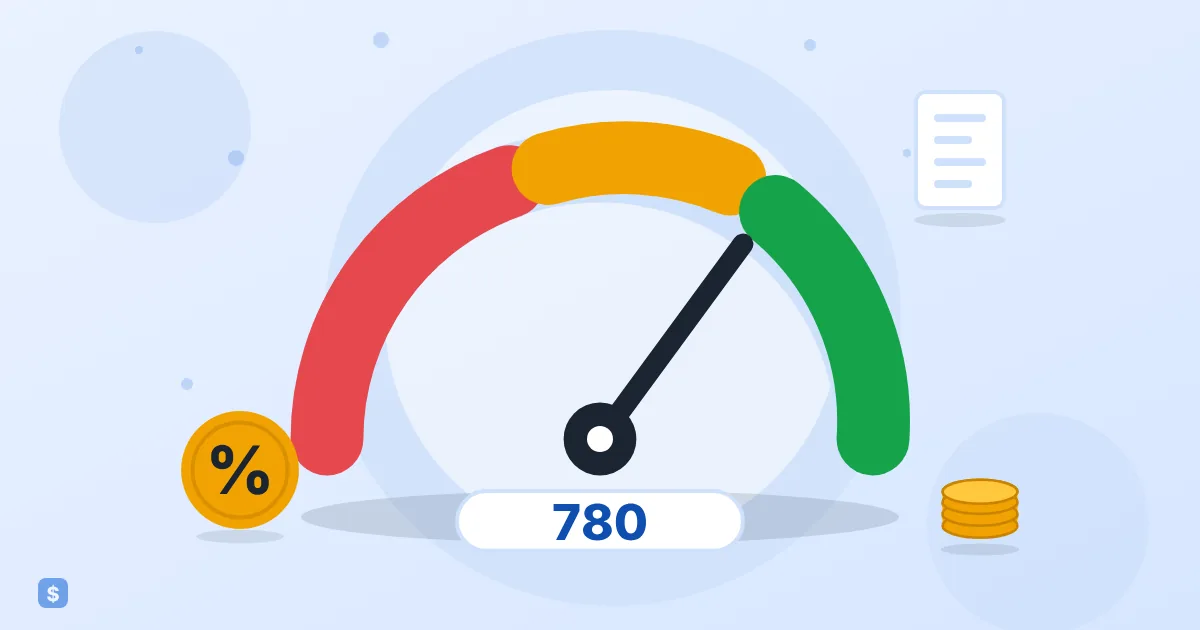
DTI is one of four things that usually get weighed together: credit score, down payment (loan-to-value), cash reserves after closing, and employment stability. A borrower at 43% with a 780 score, 20% down and six months of reserves is a very different file from a borrower at 43% with a 640 score and nothing left after closing. That is also why a “no” on one lender’s desk can be a “yes” elsewhere. If your ratio is borderline, get quotes from at least two lenders and one credit union before assuming the answer is final.
What is a good DTI for a mortgage?
Under 36% is considered strong. Between 36% and 43% is generally approvable. Above 43% requires a stronger credit profile or compensating factors.
Does DTI use gross or net income?
Gross income, which is before taxes and deductions.
Do rent payments count toward DTI?
Not for the new loan. Your current rent is replaced by the new housing payment in the calculation.
Does paying off a credit card help even if I keep the account open?
Yes. DTI uses the minimum payment, so a zero balance removes that payment from the ratio while the open account can keep helping your credit score.
Sources and further reading
How the numbers were made: Every figure on this page was calculated from the formulas and assumptions stated above and rounded. Rates, limits and rules are for 2026 unless noted; confirm current figures with the sources listed before acting.
Keep reading
- FHA vs Conventional Loan: Which Costs Less?
- How Much House Can I Afford on a $100K Salary?
- Mortgage Payment on a $400,000 House: Real Numbers
- Student Loan Repayment in 2026: What Changed and How to Run Your Numbers
- 15-Year vs 30-Year Mortgage: Which Costs Less Overall?
- Debt-to-Income Ratio: What Lenders Count and What They Ignore
This guide is general information, not financial, tax or legal advice. Figures use stated assumptions and 2026 rules and will differ from your situation; check current rules and talk to a licensed professional before you decide. Full disclaimer.